

Bone Grafting in Oceanside, CA
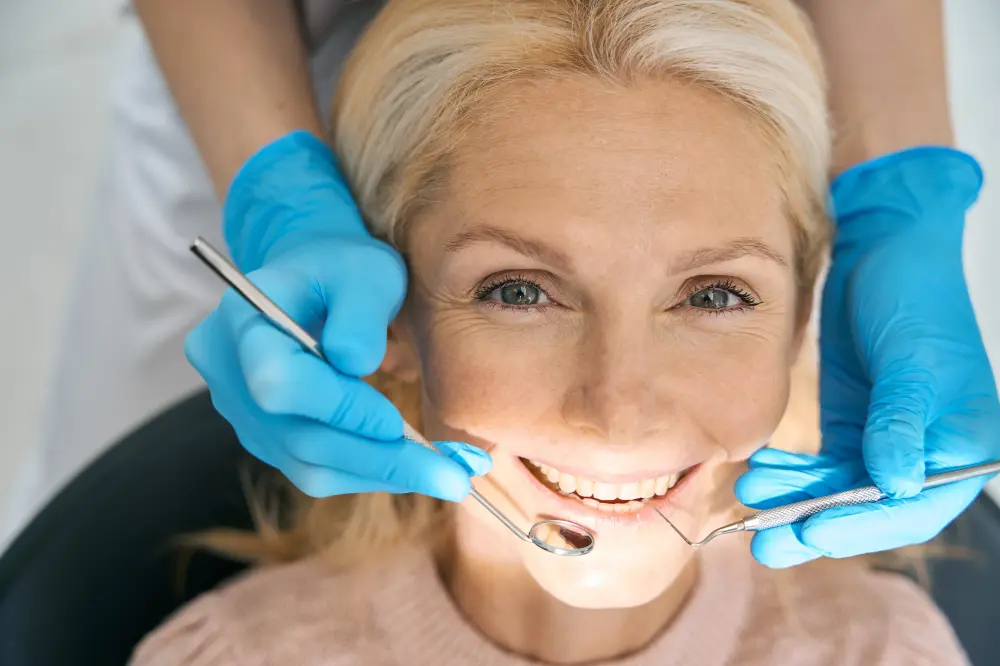
Bone grafting in Oceanside, California, restores or builds jawbone so teeth or dental implants have a stable foundation. Patients often consider a graft after tooth loss, gum disease, or injury.
What Is Bone Grafting?
Bone grafting is a surgical process that places bone or bone-like material where jawbone has thinned or resorbed. The graft acts as a scaffold. Your body forms new bone over and around it, strengthening the area.
Several graft materials are available:
- Autograft uses your own bone, often from the jaw, for natural compatibility.
- Allograft uses processed donor bone that is safe and ready to place.
- Xenograft uses purified bone from animal sources to maintain space as you heal.
- Alloplast uses synthetic materials designed to stimulate new bone growth.
How Bone Grafting Can Help You
- Restores lost volume so implants can be placed in the correct position.
- Helps protect adjacent teeth by reinforcing weak areas of the jaw.
- Preserves the ridge after an extraction to limit future bone loss.
- Improves facial support and contours where bone has thinned.
- Creates more predictable outcomes for implant surgery.
The Bone Grafting Process
The process begins with a consultation and imaging. Dental X-rays or 3D scans help map bone quality and thickness. A personalized plan outlines the graft type, the area to treat, and the expected healing time.
On the day of treatment, local anesthesia numbs the area. A small incision provides access to the bone, graft material is placed and secured, and the site is closed with sutures. A protective membrane may be used to guide bone growth.
Recovery and Healing
- Initial healing takes one to two weeks with manageable soreness and swelling.
- Full integration strong enough for an implant typically takes three to six months.
- Follow a soft-food diet, avoid smoking, and take medications as directed.
- Gentle saltwater rinses begin the day after surgery to keep the site clean.
- Call the office if you notice increasing pain after several days, persistent bleeding, pus, or fever.
What to Expect Before and After
Before surgery, plan to pause smoking, review medications, and arrange a ride if sedation is used. Eat a light meal unless instructed otherwise. After surgery, mild swelling, bruising, and soreness are common for a few days. Most patients manage discomfort with over-the-counter medication as advised. A soft-food diet, gentle saltwater rinses, and careful brushing around the site help healing.
Healing time varies with the graft type and size. Small socket grafts may be ready for an implant in three to four months. Larger ridge augmentations or sinus lifts may need four to six months or more. Potential risks include infection, graft exposure, sinus irritation (in upper jaw procedures), or delayed healing. These events are uncommon, and prompt follow-up helps resolve them.
Good home care and regular check-ins support predictable results. Attend all visits, keep the area clean, and follow diet and activity instructions. Ask about timelines for returning to the gym, wearing removable appliances, and scheduling your implant.
Plan Your Treatment
Wondering if you need a graft before your implant? Call Mission Family Dentistry at 760-439-5515 and Dr. Odenwalder can review your imaging and let you know.
Frequently Asked Questions About Bone Grafting
During the procedure, local anesthesia prevents pain. Afterward, most people report mild to moderate soreness and swelling for a few days, which improves with recommended medication and cold compresses.
Initial healing takes one to two weeks. Full integration strong enough for an implant typically takes three to six months, depending on graft size, location, and your overall health.
Options include your own bone (autograft), donor bone (allograft), animal-derived bone (xenograft), and synthetic materials (alloplast). Each has benefits tied to availability, volume, and how quickly it integrates.
Not always. If your jawbone has enough height and width, an implant may be placed without a graft. When bone is thin or soft, grafting improves stability and long-term success.
A sinus lift adds bone to the upper back jaw, creating height where the sinus is close to the ridge. It helps provide enough bone to support dental implants in that region.
Follow instructions for gentle brushing, saltwater rinses, and a soft-food diet. Avoid smoking and strenuous activity for the time advised. Keep all follow-up appointments.
Call if you notice increasing pain after several days, persistent bleeding, pus, fever, or a loose dressing or membrane. Early evaluation helps protect the graft.