

Teeth Whitening in Oceanside, CA
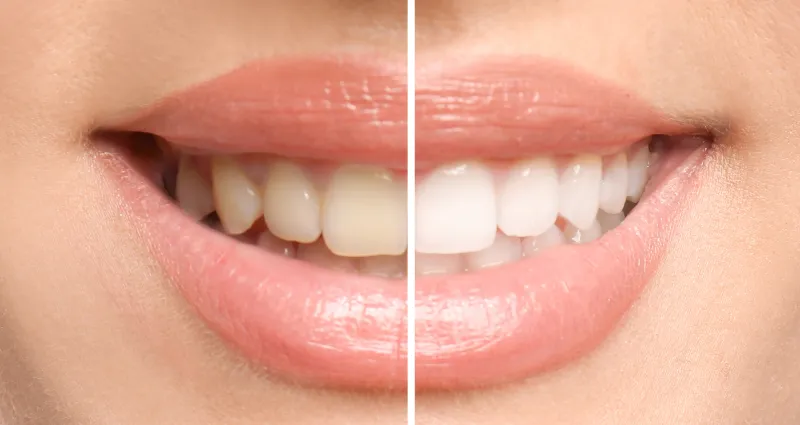
A brighter smile can make a noticeable difference in how you feel, but not every stain responds to the same treatment. Mission Family Dentistry offers professional teeth whitening in Oceanside with options tailored to your starting shade, sensitivity and timeline.
How Professional Whitening Works
Teeth whitening uses peroxide-based gels to break down stains within the enamel. The gel releases oxygen that targets pigmented molecules called chromogens, which form from foods, drinks, tobacco, and aging. This process can lighten the overall tooth shade without removing enamel.
There are two common approaches. In-office whitening uses a higher-concentration gel applied by a dental professional for faster results. Custom take-home whitening uses prescription-strength gel in trays made to fit your teeth. Over-the-counter products contain lower-strength gel and may lead to uneven coverage or slower change.
Whitening addresses most surface and age-related discoloration. Certain intrinsic stains, such as those from trauma or some medications, may respond less. A dental exam helps determine whether whitening or another cosmetic option is best for your needs.
Benefits of Professional Teeth Whitening
- Noticeable shade improvement in a short time.
- Customized care that matches your goals and sensitivity level.
- Even, consistent coverage with professional application or custom trays.
- Monitored treatment that supports enamel and gum safety.
- Guidance on maintenance so your results last longer.
- Flexible options for single-visit or gradual at-home change.
The Teeth Whitening Process
Evaluation and Treatment Planning
A dental exam checks for cavities, gum inflammation, cracks, or exposed roots that could increase sensitivity. Your baseline shade is recorded, goals are discussed, and the most suitable option—single in-office visit, custom take-home trays, or a combination—is selected.
In-Office Whitening
- Teeth are cleaned and the gums are protected with a barrier.
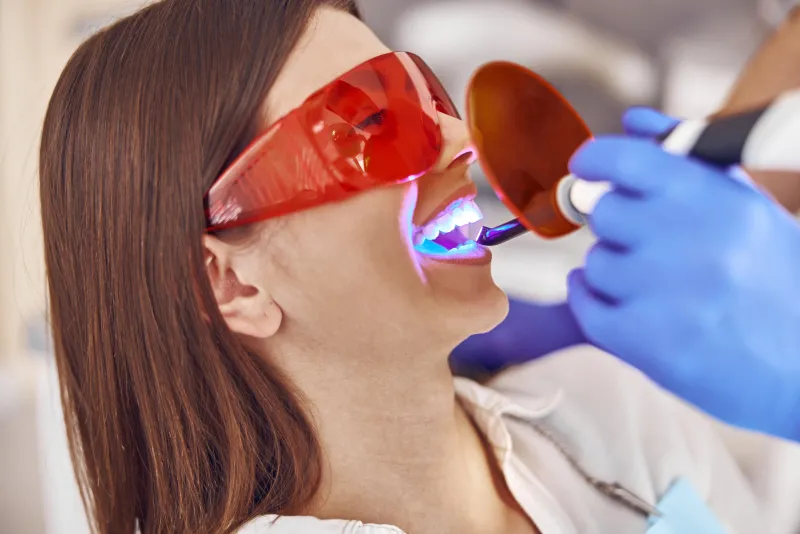
- Whitening gel is applied in short cycles, often 15 to 20 minutes each.
- The gel may be refreshed for two to three rounds, based on your response.
- Results are checked against the starting shade, and aftercare is reviewed.
Custom Take-Home Whitening
- Precise impressions or scans are used to make close-fitting trays.
- You place small amounts of gel in each tooth well and wear trays as directed.
- Use is typically once daily for 10 to 14 days, with periodic shade checks.
- Desensitizing gel or toothpaste can be added if needed.
What to Expect Before and After Whitening
Before treatment, a cleaning removes plaque and surface buildup so the gel contacts enamel evenly. During whitening, you may feel brief zings or cold sensitivity. This is common and usually fades within 24 to 48 hours.
Whitening does not change the color of crowns, veneers, or fillings. If existing restorations are visible after whitening, replacement can be planned to match the new shade.
- Avoid coffee, tea, red wine, berries, and tobacco for 24 to 48 hours after whitening.
- Use a desensitizing toothpaste with potassium nitrate if teeth feel tender.
- Rinse with water after dark foods and drinks to help reduce new stains.
- Schedule routine cleanings and consider periodic touch-ups to maintain brightness.
Results vary, but many people keep a lighter shade for six months to two years with good habits. Our dentist can suggest a maintenance plan that fits your lifestyle in Oceanside, CA.
Brighten Your Smile
Ready for a brighter smile? Call Mission Family Dentistry at 760-439-5515 to discuss your options with Dr. Odenwalder.
Frequently Asked Questions About Teeth Whitening
Yes, when performed under professional guidance and used as directed, whitening gels are considered safe for enamel. The most common side effect is temporary sensitivity.
Longevity depends on diet, tobacco use, and home care. Many patients maintain results for months to years with mindful habits and occasional touch-ups.
No. Whitening gels only affect natural tooth enamel. If restorations no longer match after whitening, they can be replaced to the new shade.
Whitening can temporarily open microscopic enamel pathways, making teeth feel sensitive to cold. Using a desensitizing toothpaste, spacing sessions, or switching gel strength can help.
In-office whitening offers faster, concentrated results in one visit. Take-home trays deliver gradual change and flexibility. Many patients choose a combination for both speed and control.
People with untreated cavities, gum disease, active cracks, or severe sensitivity should address those issues first. Whitening is not recommended during pregnancy. A dental exam confirms candidacy.
Areas with thicker enamel or white spots may respond differently at first. Guided protocols and tray adjustments help create a more uniform final shade.